
Wine walls plug & play
Customisable plug-and-play wine walls and wine cabinets with self-contained cooling — a standout display with the right conditions for storage or serving.
View range
Perfect for entertaining and where space is limited. Showcase your collection safely in a compact wine wall, with the right conditions for long-term storage.
A wine wall gives strong visual impact with limited floor space. Because wine walls often include glass, lighting and display racking, they need careful coordination — glazing specification, door seals, airflow, humidity and temperature control all affect performance.
For compact wine walls, early cooling advice is important: the wine wall cooling system should be considered before the glass, joinery and racking are finalised. Encool supplies self-contained plug-and-play options and compact split systems suited to wine display cooling in homes and hospitality settings.
See our guides to small wine rooms and wine walls and glazing, insulation and vapour barriers.
Customisable plug-and-play wine walls and wine cabinets with self-contained cooling — a standout display with the right conditions for storage or serving.
View range
Compact plug-in self-contained cooling unit for wine spaces up to 8m³ — well suited to wine cabinets, wine walls and very small rooms.
View unit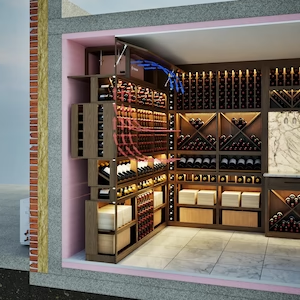
Split system cooling unit for wine cellars up to 15m³. The evaporator installs inside while the condenser can be placed up to 10m away for quiet operation.
View unit
Many UK homes have compact spaces that can become effective climate-controlled wine storage — under-stairs areas, cupboards, alcoves and small storerooms.
Read guide
Insulation and vapour sealing drive cellar performance. Learn the build rules, glazing specs and common failure points that protect your cooling system.
Read guideYes. It is more complex to successfully climate-control a smaller air volume such as a wine wall. A larger glass area can increase heat gain and condensation risk. The cooling system, airflow path, glazing specification, carcass insulation and door design should be considered together.
Condensation forms when a surface falls below the dew point of the surrounding air. High room humidity, low glass surface temperature, poor glazing, weak seals or cold bridging may all contribute.
Mitigate condensation risk on the outside of the temperature-controlled cellar by using argon-filled double or triple glazing, correct door seals, thermal breaks and stable room design (thermal insulation and vapour barrier).
If you have an existing cellar that has condensation forming on the outside of the glass and you have already checked seals etc, you may need to increase the set temperature of your cellar by a few degrees to avoid reaching the dew point, or cool the ambient space/decrease humidity.
Metal framed doors should have a thermally broken frame profile, or a low voltage heated glass/frame design.
If condensation is forming on the inside of the cellar, there may be damp/water ingress which needs to be resolved. You may also need to introduce controlled humidity, heating/cooling functionality and ensure suitable airflow.
Get cooling advice before the glass, joinery and racking are finalised — our engineers will help you specify the right wine wall cooling system.