
HSN-JC8
Compact plug-in self-contained cooling unit for wine spaces up to 8m³ — well suited to wine cabinets, wine walls and very small rooms.
View unit
An under-stair cellar turns dead space into a purposeful wine feature, giving you practical storage and a clean, integrated look.
An under-stairs area is one of the most effective ways to use otherwise underused space. The main design challenge is the shape — angled ceilings, restricted access and small floor areas mean the cooling system, racking, lighting and services need to be coordinated early.
A well-planned under-stairs wine room can provide practical storage and a strong visual feature in a compact footprint. Encool supplies compact self-contained and split system options suitable for under stairs wine cellar cooling, with quiet operation and built-in humidity control on split systems.
See our guide to planning small wine rooms — including under-stairs conversions — or try the cooling calculator.
Compact plug-in self-contained cooling unit for wine spaces up to 8m³ — well suited to wine cabinets, wine walls and very small rooms.
View unit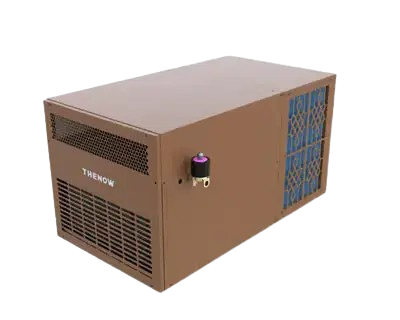
Self-contained through-the-wall wine cellar cooling unit for cellars of 4–12m³ — a simple install with a neat grille face where pipework routes are difficult.
View unit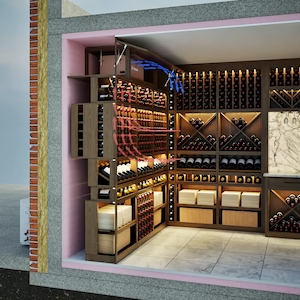
Split system cooling unit for wine cellars up to 15m³. The evaporator installs inside while the condenser can be placed up to 10m away for quiet operation.
View unit
Many UK homes have compact spaces that can become effective climate-controlled wine storage — under-stairs areas, cupboards, alcoves and small storerooms.
Read guide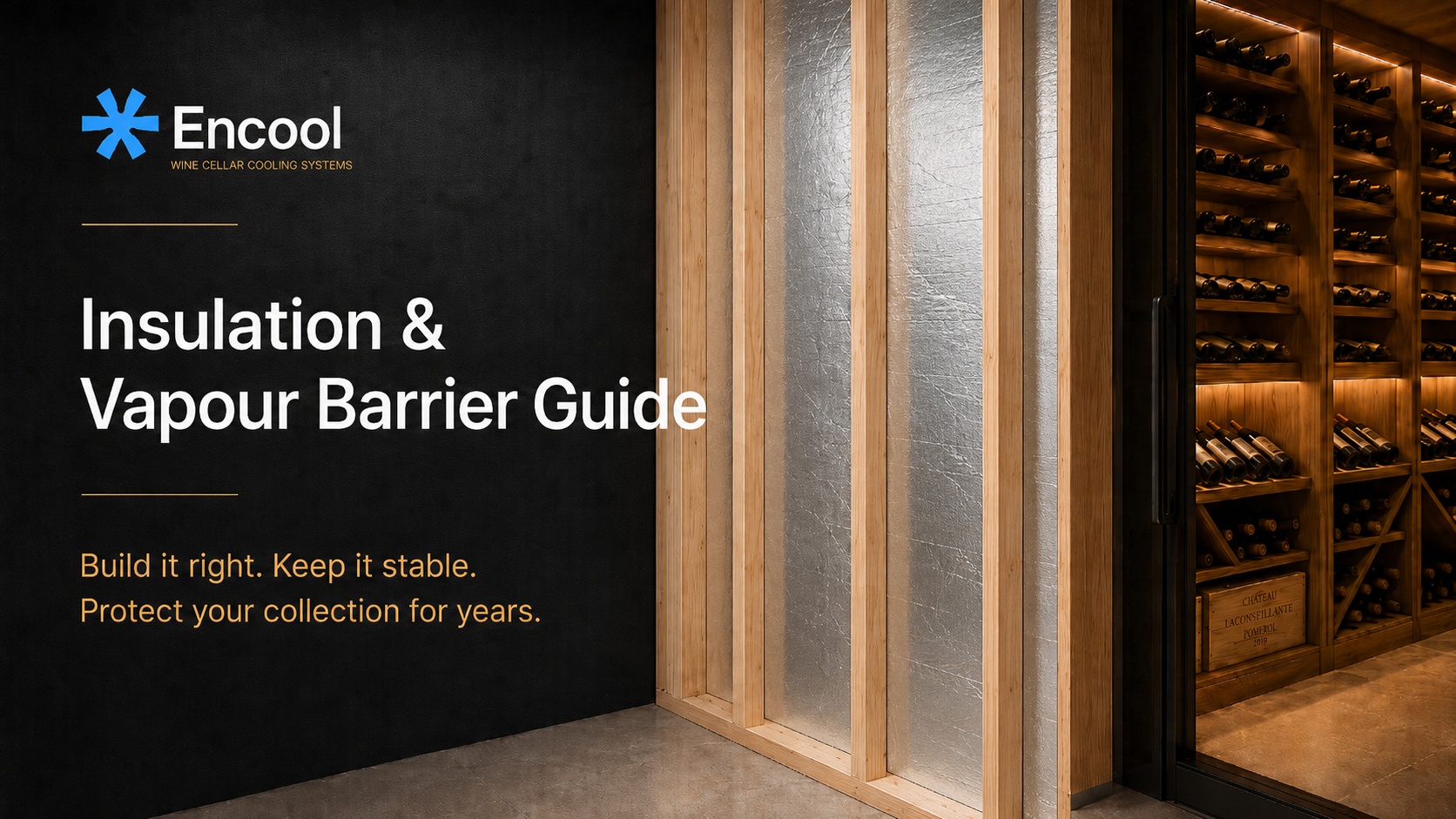
Insulation and vapour sealing drive cellar performance. Learn the build rules, glazing specs and common failure points that protect your cooling system.
Read guideYes. The room should be built as a controlled environment. Poor insulation increases energy use, temperature instability and condensation risk.
A vapour barrier is strongly recommended for most controlled wine rooms. It helps reduce moisture movement into the cooled space and lowers condensation risk within the structure.
Air leakage increases cooling load and humidity instability. It may cause condensation, temperature drift, short cycling and poor system performance.
Send us dimensions and photos of the space — our engineers will advise on the most suitable compact cooling option before the design is finalised.